

Ecuador Volcanoes Expedition – Chimborazo & Cotopaxi
Key trip facts
- Country: Ecuador
- Trip type: trekking and volcano ascents
- Main objectives: Cotopaxi, Chimborazo and acclimatisation peaks included in the programme
- Highest point: Chimborazo – 6,263 m a.s.l.
- Requirements: very good fitness, good altitude tolerance and solid mountain preparation
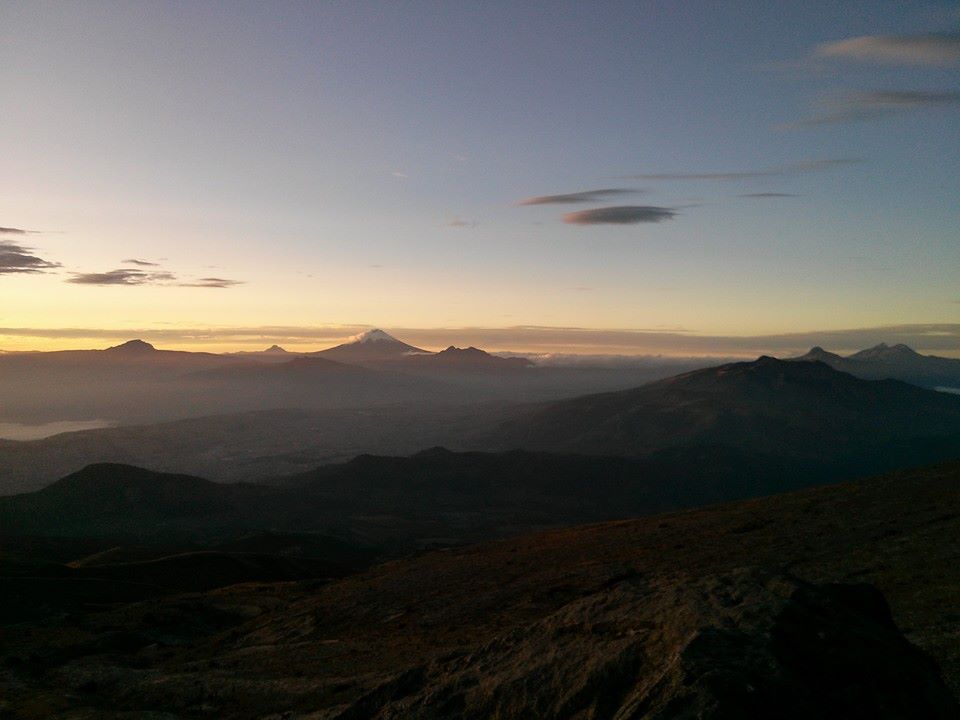
Ecuador is a country about half the size of Poland. In this relatively small area we can find 30 volcanoes, the Amazon jungle, the ocean with unique wildlife, and traces of Inca civilisation. Chimborazo, 6310 m, is not only the highest volcano in Ecuador, but also one of the highest volcanoes in the world, and because it is so close to the equator, it is the highest mountain on Earth if measured from the planet’s core. In this respect, it is 2150 m higher than Mount Everest.
Interestingly, until the middle of the 19th century the mountain was believed to be the highest mountain in the world. During our expedition we will also try to climb another giant, Cotopaxi – 5897 m, which is the highest active volcano in the world, and we will acclimatise on another active volcano, Guagua Pichincha (4780 m).
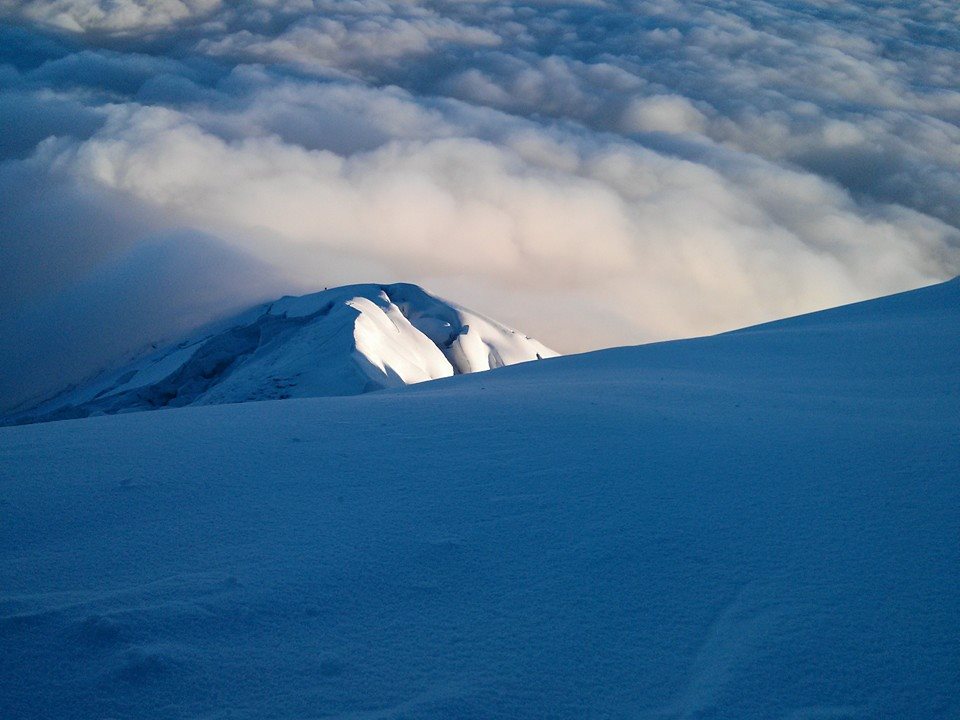
The mountains in Ecuador are characterised by highly unstable weather. The best months for climbing Chimborazo are June–July and December–January. The mountain is very close to the equator; however, because of its height you must be prepared for very low temperatures. At night the temperature can fall below -15°C. Volcanoes in Ecuador are often surrounded by fog, both during the day and at night.
If we do not want to get lost, we must hire local guides who know the route perfectly, as well as the places where crevasses appear.
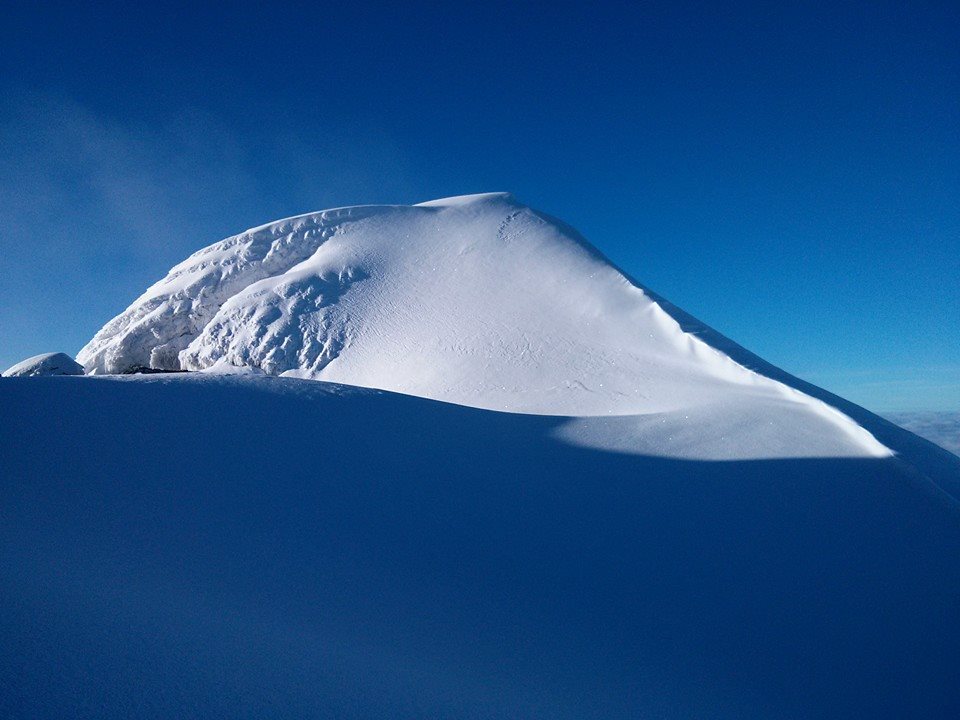
We ascend along a classic route, which is of متوسط difficulty. Its slope reaches 40 degrees and there may be some steeper sections. On Chimborazo the surface is sometimes icier. Chimborazo is an extinct volcano, so the slope is regular. On our way there will be crevasses, so we will be roped together. Moderate technical difficulty makes this mountain a perfect destination for more ambitious mountain hikers and climbers who want to test themselves at greater altitude. 6310 m is a demanding height.
It is almost 200 metres higher than McKinley! A bit easier to climb is Cotopaxi (5897 m), which is a very regular, beautifully shaped volcano. The slope is gentler; however, there are more crevasses and seracs, so sometimes we have to use a ladder. What is amazing about Cotopaxi is not only the mountain itself, but also the route to the summit, which is one of the most beautiful glacier routes because of the glacier formations.
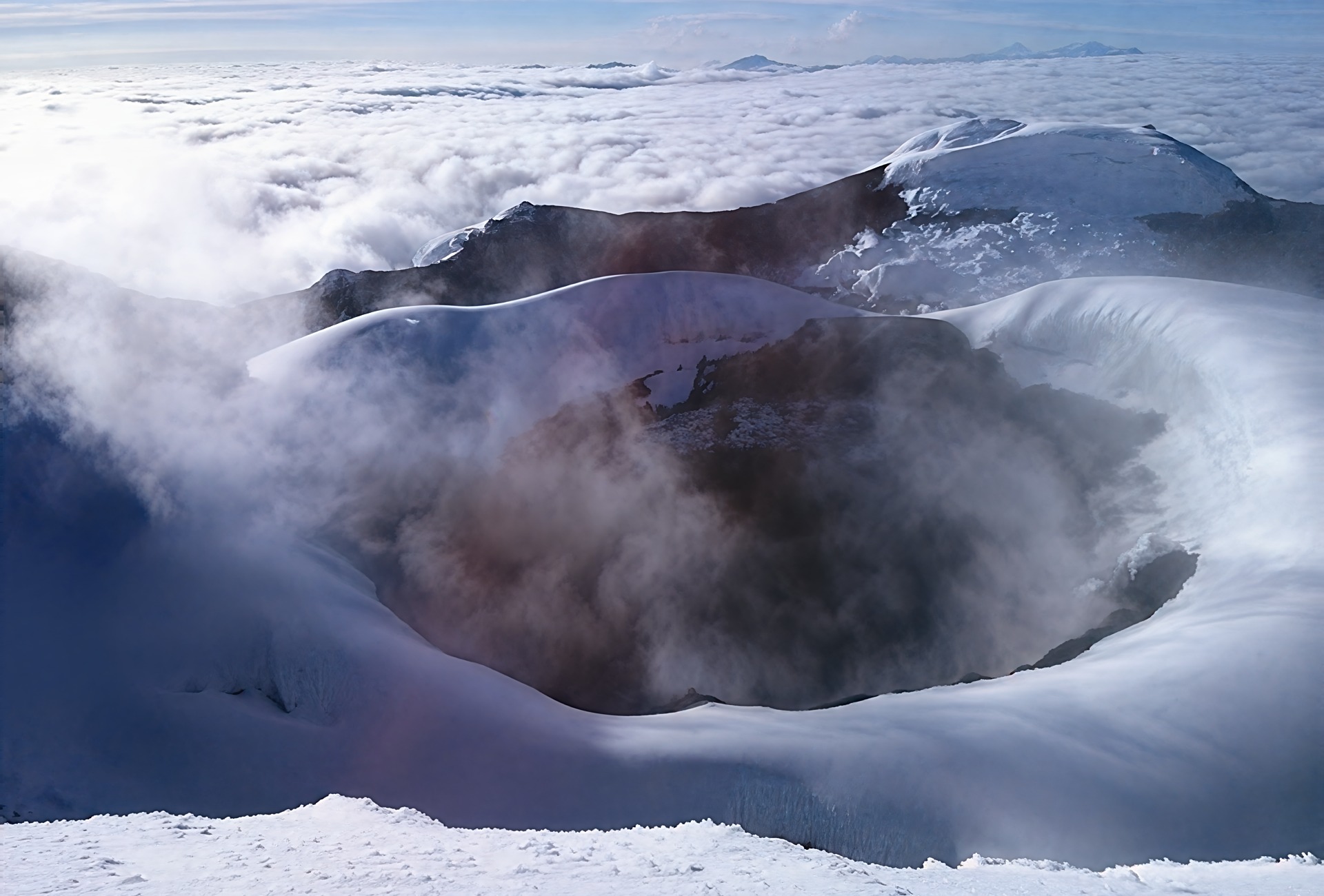
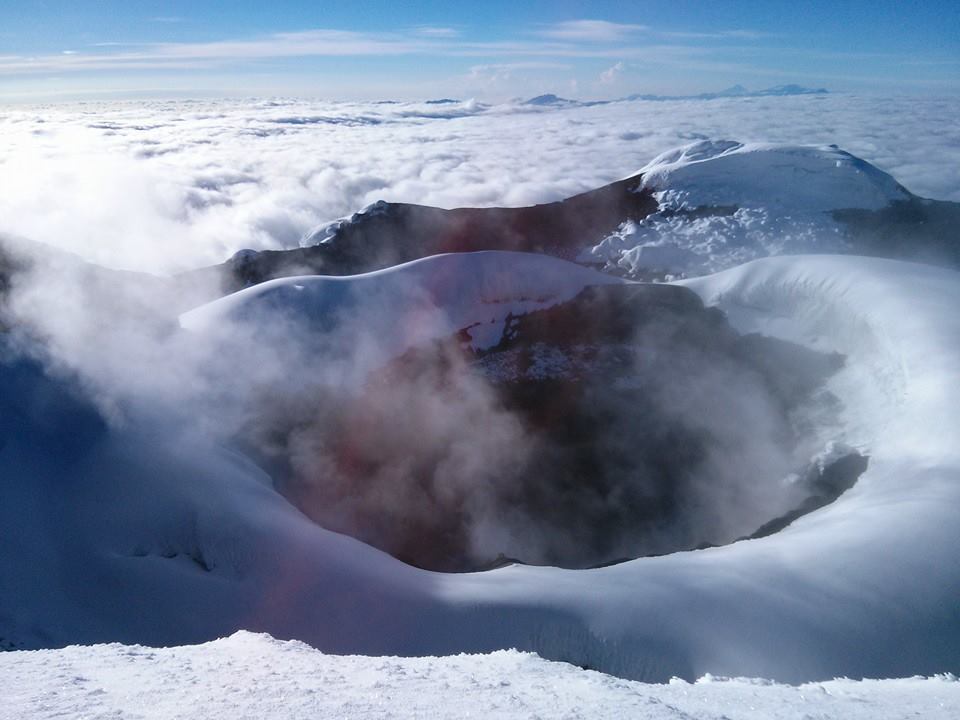
At the summit we will see a crater that gives off volcanic fumes. The easiest objective will be the first mountain – Guagua Pichincha, which has no glacier but is also an active volcano. Volcanic fumes emitted by Cotopaxi and Guagua Pichincha create additional difficulties. They reduce the amount of oxygen in the air. Almost everyone experiences general weakness caused by the great altitude, often accompanied by headaches.
We try to ensure thorough acclimatisation so as to make these problems less significant. That is why we start with the lowest peak and then, by climbing higher ones, we acclimatise gradually. Every participant must be in good physical condition. It is also recommended to have climbing experience gained in high mountains. We suggest preparing for the expedition through intensive hiking in the mountains.
Caution!
It is impossible to take part in the expedition if you suffer from any illness that makes staying at high altitude dangerous to your health.
COSTS
6500 PLN + 2500 USD
The price includes: flight to Quito and back, transport by coaches and pick-ups in the mountains, other necessary means of transport, organisation of the expedition, food (2 meals a day – breakfast and dinner), climbing insurance, accommodation in tourist-class hotels, accommodation in mountain shelters, basic training, entrance fees to Cotopaxi and Chimborazo National Parks, stay at the ocean, club fee (500 PLN), excursions to the jungle near Puno or to the ocean and Isla de la Plata (for the first time included in the price), and local guides on Cotopaxi and Chimborazo (included in the price for the first time).
The price does not include: excess luggage, alcohol, a trip to the equator, a possible trip to the jungle near the border with Colombia or Brazil (400 USD), and a possible trip to the Galapagos.
The date of the expedition may change by +/- 5 days.
APPLICATIONS
- If you are willing to take part in the expedition, please apply by 25 August.
- To confirm your application, please pay 6500 PLN for the ticket and insurance to our bank account.
- Please send us your name, surname, date and place of birth, address, and ID number by e-mail or contact page
ITINERARY
From Warsaw (or, in the case of a big difference in ticket prices, from Berlin or Vienna; we provide transport there) we fly to the capital of Ecuador – Quito. The next days are intended for acclimatisation. First we rest in Quito or possibly go to the equator to observe amazing physical phenomena and visit the crater of a volcano. Next we climb the active volcano Guagua Pichincha, 4794 m, which is next to the city.
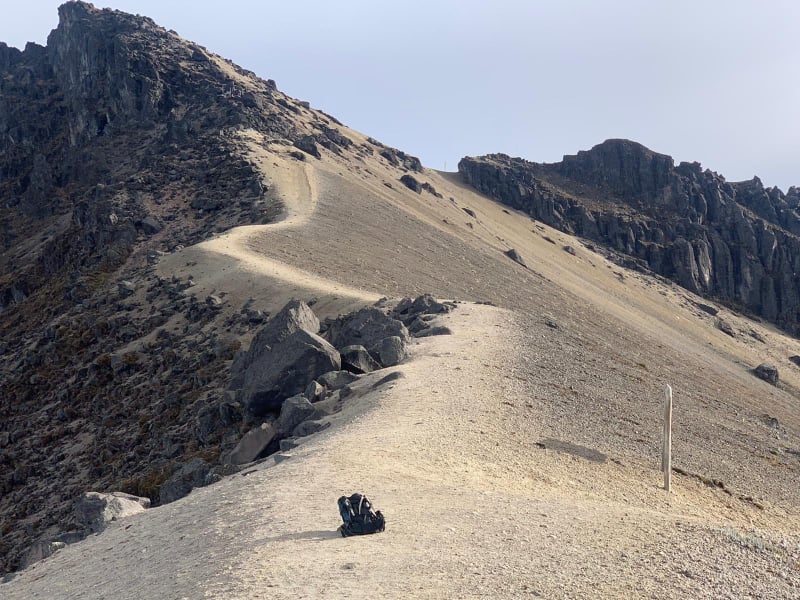
We get to the village of Lloa, from where, within the next few hours, we should reach the shelter at the height of 4500 m, where we spend the night. After the night we climb Pichincha along a beautiful ridge, surrounded by fumes. We return to Quito the same day. Next we acclimatise on the slopes of the highest active volcano in the world – Cotopaxi (5897 m).
After a night in a hotel or a shelter we travel by coach to the place called “Entrada del Cotopaxi”, where we get into off-road vehicles and reach the height of 4500 m, from where we continue on foot to the José Ribas shelter, situated at the height of 4700 m. We spend the next day in the shelter and go for walks around it to acclimatise. The following day we climb the volcano. The route to the summit leads among powerful crevasses and takes about 6–8 hours.
At the height of 5897 m we have a chance to look into the fuming crater. It is 700 metres in diameter and was first explored by a Polish-Czech expedition in the 1970s.
When we descend from Cotopaxi we take a coach to Baños, where we can rest in hot springs. After that we go by bus to Riobamba and then by taxi to the Whymper shelter on the slope of Chimborazo at the height of 5000 m. On our way we can admire flocks of llamas. If visibility is good, we can see 70% of our route on Chimborazo from the shelter. We get up at midnight and after a short meal set off towards the summit.
First we climb a snowy slope and after 2 hours we reach a broad ridge, along which we continue ascending. We get to the first summit, from which we have to go 150 m down, and then we face the most difficult section, which is the ascent to the main summit. After about 8 hours we should stand on the highest mountain in the world in certain respects. Descending to the shelter takes about 3–4 hours. For safety reasons we cannot stay on the summit longer than until 8 o’clock.
After the ascent of Chimborazo we return to Baños, from where we can either go and stay at the ocean and take a cruise to Isla de la Plata, or take a trip to the rainforest around Baños, where we could observe jungle plants, travel in pirogues, eat ants and grubs, drink water from trees, swim under a waterfall, and visit a shaman.
Day-by-day itinerary:
- flight to Quito
- trip to the equator, egg and water tests (optional)
- ascent to the shelter at the foot of Guagua Pichincha (4500 m)
- ascent of Pichincha, rest among the fumes (4800 m)
- rest in Quito
- travel to the shelter at the foot of Cotopaxi (4700 m)
- training and reconnaissance
- ascent of Cotopaxi (5897 m) – the highest active volcano in the world; the ascent takes place on one of the most beautiful glaciers
- travel to Baños
- rest in Baños – hot springs, a town similar to Zakopane, at the foot of the active volcano Tungurahua
- travel to the shelter at the foot of Chimborazo (5000 m)
- ascent of Chimborazo (6310 m) – the highest mountain in the world when measured from the Earth’s core
- return to Baños
- 3–4 day trip to the jungle around Puno or to the ocean
- return to Quito
- flight to Poland
You may also be interested in
- Grossglockner
- Kazbek
- Mont Blanc
- Monte Rosa
- Elbrus
- Ojos del Salado – 6,893 m
- Damavand
- Easy mountaineering
EQUIPMENT NEEDED
- Gore-Tex or similar jacket
- 2 fleece jackets – fleece 100 and fleece 200, or fleece 200 and fleece 300, or fleece 200 and a down sweater
- fleece trousers – fleece 100/150
- Gore-Tex or similar trousers
- 2 pairs of woollen or other warm socks
- other socks, including moisture-wicking ones
- 2 pairs of thick fleece gloves (they must not squeeze the fingers, especially the fingertips), or warm ski gloves; best of all, down over-mittens
- Gore-Tex over-mittens
- hat
- breathable underwear
- mountaineering boots or modern insulated boots, or thick and warm leather boots with thermal lining (they must be loose enough not to squeeze the toes even when you are wearing thick socks, and tight enough to keep the heel stable while walking); best 1–1.5 sizes too big
- you may take spare light trekking shoes
- trainers or sandals
- glacier glasses
- trekking gaiters
- stove burner (pierceable cylinders, Bluet Camping Gas)
- rucksacks: 70 l and 40 l
- warm sleeping bag, minimum -5°C
- foam sleeping pad
- vacuum flask 0.7 l–1 l
- headlamp and spare batteries
- watch
- toiletries
- cutlery
- mess tin
- sun protection cream, SPF 30–60, preferably Vichy
- wind mask
- chemical warmers
- 2 rolls of toilet paper
- underwear
- Bic lighter
- NRC foil